This subject can be found in the study called The Atonement.
3. The Resurrection of Christ
The New Testament is full of evidence for the resurrection of Jesus (Mt 28:1-20; Mk 16:1-8; Lk 24:1-53; Jn 20:1-21:25).
[1] WHEN the Sabbath was over, Mary
Magdalene, and Mary the mother of James, and Salome, bought spices, so
that they might come and anoint Him. [2] Very early on the first day of
the week, they came to the tomb when the sun had risen. [3] They were
saying to one another, Who will roll away the stone for us from the
entrance of the tomb? [4] Looking up, they saw that the stone had been
rolled away, although it was extremely large. [5] Entering the tomb,
they saw a young man sitting at the right, wearing a white robe; and
they were amazed. [6] And he said to them, Do not be amazed; you are
looking for Jesus the Nazarene, who has been crucified. He has risen;
He is not here; behold, here is the place where they laid Him. [7] But
go, tell His disciples and Peter, "He is going ahead of you to Galilee;
there you will see Him, just as He told you.' [8] They went out and
fled from the tomb, for trembling and astonishment had gripped them;
and they said nothing to anyone, for they were afraid. (Mk 16:1-8)
Apart from the gospel narratives of the resurrection, there is
the continued proclamation of the resurrection and also prayer to Jesus
in the book of Acts.
3.1 The Nature of Christ’s resurrection
The resurrection of Christ was no ordinary resurrection. If it
was a normal resurrection of the dead, then Christ would have been
raised from the dead to live in the same earthly bound body as He had
before He died. It would then have been a body quite the same as that
of Lazarus after he was raised from the dead. It would have been a body
filled with decay, bound for destruction as all humans would.
However, the resurrection of Christ was not of this kind.
[20] But now Christ has been raised from
the dead, the first fruits of those who are asleep… [23] But each in
his own order: Christ the first fruits, after that those who are
Christ's at His coming, (1 Cor 15:20, 23)
He was the first fruits of a life that was new, with a body
that was new, showing no weakness, aging or death. The body of Christ
is as described in 1 Cor 15:51-55:
[51] Behold, I tell you a mystery; we will
not all sleep, but we will all be changed, [52] in a moment, in the
twinkling of an eye, at the last trumpet; for the trumpet will sound,
and the dead will be raised imperishable, and we will be changed. [53]
For this perishable must put on the imperishable, and this mortal must
put on immortality. [54] But when this perishable will have put on the
imperishable, and this mortal will have put on immortality, then will
come about the saying that is written, DEATH IS SWALLOWED UP in
victory. [55] O DEATH, WHERE IS YOUR VICTORY? O DEATH, WHERE IS YOUR
STING?
Christ’s resurrection body is imperishable. His body was raised a spiritual body.
[42] So also is the resurrection of the
dead. It is sown a perishable body, it is raised an imperishable body;
[43] it is sown in dishonor, it is raised in glory; it is sown in
weakness, it is raised in power; [44] it is sown a natural body, it is
raised a spiritual body. If there is a natural body, there is also a
spiritual body. (1 Cor 15:42-44)
However, this body could also be touched (Mt 28:9) and
appeared as a normal body to the disciples (Lk 24:15-18, 28-29).
Although His body was a real body (Lk 24:39), He could also disappear
from the disciples’ sight (Lk 24:31, 36; Jn 20:19, 26).
3.2 Resurrection participation
There are some texts that specifically say that God the Father
raised Christ from the dead (Ac 2:24; Rom 6:4; 1 Cor 6:14; Gal 1:1; Eph
1:20)
Now God has not only raised the Lord, but will also raise us up through His power. (1 Cor 6:14)
Yet, there are other texts that speak of Christ cooperating in His own resurrection (Jn 10:17-18).
[19] Jesus answered them, "Destroy this
temple, and I will raise it again in three days." [20] The Jews
replied, "It has taken forty-six years to build this temple, and you
are going to raise it in three days?" [21] But the temple he had spoken
of was his body. (Jn 2:19-21 NIV)
We have to conclude that both the Father and the Son were involved in the resurrection of Christ. In fact, Jesus said:
I am the resurrection and the life (Jn 11:25; cf. Heb 7:16)
3.3 Resurrection insurance
3.3.1 Regeneration insurance
The resurrection of Christ insured the fact that we could be regenerated into a new life.
Blessed be the God and Father of our Lord
Jesus Christ, who according to His great mercy has caused us to be born
again to a living hope through the resurrection of Jesus Christ from
the dead (1 Pet 1:3)
Through the resurrection, Christ earned for us this new life
when we are born again (Eph 2:5-6). The same power that raised Christ,
is also the power that works in the hearts of those who believe (Eph
1:19-20).
3.3.2 Justification insurance
God’s declaration of approval of Christ’s work on the cross for our redemption, is the fact that He was raised from the dead.
[8] And being found in appearance as a man,
he humbled himself and became obedient to death-- even death on a
cross! [9] Therefore God exalted him to the highest place and gave him
the name that is above every name (Phil 2:8-9 NIV)
The exaltation of Christ occurred when He was raised from the
dead. It is because of the resurrection of Christ that our
justification before the Father can be sealed.
[Jesus] was delivered over because of our transgressions, and was raised because of our justification. (Rom 4:25)
As Christ was raised up for our justification, the Father can now see us “as raised up with Him” (Eph 2:6).
3.3.3 Bodily insurance
The resurrection of Christ has insured the fact that those who
have put their trust in Him, will also receive perfect resurrection
bodies (1 Cor 6:14; 15:12-58; 2 Cor 4:14).
4. The Ascension of Christ
Having risen from the dead, Jesus remained on earth for a further forty (40) days on earth (Ac 1:3).
[50] And He led them out as far as Bethany,
and He lifted up His hands and blessed them. [51] While He was blessing
them, He parted from them and was carried up into heaven. (Lk 24:50-51)
[9] And after He had said these things, He
was lifted up while they were looking on, and a cloud received Him out
of their sight. [10] And as they were gazing intently into the sky
while He was going, behold, two men in white clothing stood beside
them. [11] They also said, Men of Galilee, why do you stand looking
into the sky? This Jesus, who has been taken up from you into heaven,
will come in just the same way as you have watched Him go into heaven.
(Ac 1:9-11)
One day, Jesus will return to get us so that we can also be with the Father!
5. The Holy Spirit
The work of the Holy Spirit is evident from the beginning in Gen 1:2 right through the Bible.
From the very beginning of creation we have an
indication that the Holy Spirit’s work is to complete and sustain what
God the Father has planned and what God the Son has begun...1
We can see this from the beginning of creation in Gen 1:2 to
the day of Pentecost when the church was born. In the new covenant age,
the Holy Spirit seems to be the person who deals with us on the earth,
especially in the church, and it is for this reason that Paul calls the
Holy Spirit’s work in us the “first fruits” (Rom 8:23), and also sees
the Spirit as a deposit or guarantee in our lives (2 Cor 1:22; 5:5).
5.1 Aspects of the work of the Holy Spirit
5.1.1 The enabling work of the Holy Spirit
The Holy Spirit’s role in nature is to give life to animate creatures.
You send forth Your Spirit, they are created (Ps 104:30)
Apart from His enabling and life giving work to animate creatures, the Holy Spirit also gives us new life in regeneration (Jn 6:63; Rom 8:11; 2 Cor 3:6).
[5] Jesus answered, Truly, truly, I say to
you, unless one is born of water and the Spirit he cannot enter into
the kingdom of God. [6] That which is born of the flesh is flesh, and
that which is born of the Spirit is spirit. [7] Do not be amazed that I
said to you, "You must be born again.” [8] The wind blows where it
wishes and you hear the sound of it, but do not know where it comes
from and where it is going; so is everyone who is born of the Spirit.
(Jn 3:5-8)
The Holy Spirit also enables us with His power for service. We can see this pattern of enablement for service in the Old Testament and in the New Testament.
In the Old Testament
we can see this occur in the lives of many people such as Joshua and
David (Ex 31:3; 35:31, 34; Num 27:18; Dt 34:9; Jud 3:10; 6:34; 11:29;
13:25; 14:19; 15:14; 1 Sam 11:6; 1 Sam 16:13).
[5] Then Samson went down to Timnah with
his father and mother, and came as far as the vineyards of Timnah; and
behold, a young lion came roaring toward him. [6] The Spirit of the
LORD came upon him mightily, so that he tore him as one tears a young
goat though he had nothing in his hand. (Jud 14:5-6)
The Old Testament even prophesied that when the Messiah
(Jesus) came, that the Holy Spirit would be upon Him (Is 11:2-3; 42:1;
61:1).
The enabling of people by the Holy Spirit in God’s work continues in the New Testament.
Naturally, as we look at the prophecies concerning the Holy Spirit upon
the Messiah, we can see that in the New Testament (Mt 3:16; Mk 1:1; Lk
3:22; 4:1, 9-19).
The disciples were also enabled for service by the Holy Spirit.
but you will receive power when the Holy
Spirit has come upon you; and you shall be My witnesses both in
Jerusalem, and in all Judea and Samaria, and even to the remotest part
of the earth. (Ac 1:8)
There are several examples of the Holy Spirit empowering the disciples or apostles for works of miracles (Ac 6:5, 8; 1 Cor 2:4).
[17] Therefore in Christ Jesus I have found
reason for boasting in things pertaining to God. [18] For I will not
presume to speak of anything except what Christ has accomplished
through me, resulting in the obedience of the Gentiles by word and
deed, [19] in the power of signs and wonders, in the power of the
Spirit; (Rom 15:17-19)
He also enabled the early church to preach the gospel (Ac 4:8,
31; 6:10; 1 Thes 1:5; 1 Pet 1:12). The Spirit further enables the
church for service by the giving of spiritual gifts (1 Cor 12:11; cf 1
Cor 12-14).
5.1.2 The purifying work of the Holy Spirit
One of the primary functions of the Holy Spirit is to cleanse
us from sin or to sanctify us. The Holy Spirit makes us more holy in
our daily conduct. The Holy Spirit not only works in the lives of God’s
people, but is also a restraining influence on unbelievers (Ac 7:51).
[8] And He, when He comes, will convict the
world concerning sin and righteousness and judgment; [9] concerning
sin, because they do not believe in Me; [10] and concerning
righteousness, because I go to the Father and you no longer see Me;
[11] and concerning judgment, because the ruler of this world has been
judged. (Jn 16:8-11)
When people become Christians, the Holy Spirit starts His work
of cleansing in their hearts. He starts with an initial cleansing work
to start us off with, and then carries on with that work until the day
we die (Tit 3:5).
And that is what some of you were. But you
were washed, you were sanctified, you were justified in the name of the
Lord Jesus Christ and by the Spirit of our God. (1 Cor 6:11 NIV)
The Holy Spirit will then do a continuous work in us to produce the fruit of the Holy Spirit.
[22] But the fruit of the Spirit is love,
joy, peace, patience, kindness, goodness, faithfulness, [23]
gentleness, self-control; against such things there is no law. (Gal
5:22-23)
This changing work of the Holy Spirit in our lives (Rom 8:4,
13, 15-16; Phil 1:19; 2 Thes 2:13; 1 Pet 1:2) is called sanctification.
5.1.3 The revealing work of the Holy Spirit
for no prophecy was ever made by an act of human will, but men moved by the Holy Spirit spoke from God. (2 Pet 1:21)
The Old Testament was written by these writers through the
revealing work of the Holy Spirit (Mt 22:43; Ac 1:16; 4:25; 28:25; 2
Pet 1:21).
Even the New Testament writers had everything revealed to them by the Holy Spirit (Eph 3:5).
But when He, the Spirit of truth, comes, He
will guide you into all the truth; for He will not speak on His own
initiative, but whatever He hears, He will speak; and He will disclose
to you what is to come. (Jn 16:13)
The Holy Spirit also reveals or gives evidence of God’s
presence. It is He who witnesses in our spirits that we are God’s
children (Rom 8:16). He is also the One who is the down payment of our
future communion with God in heaven (2 Cor 1:22; 5:5). He also provides
the evidence of God’s presence through His gifts (1 Cor 12:7-11) and
also by miraculous wonders He performs (Rom 15:19; Heb 2:4; 1 Cor 2:4).
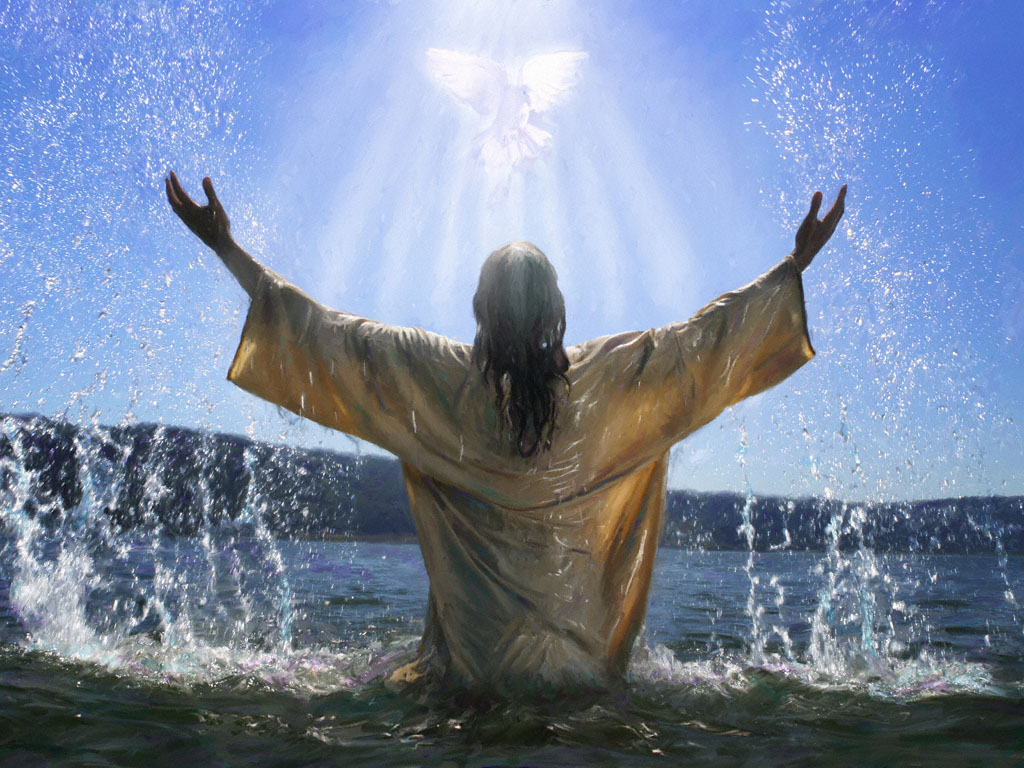
The Holy Spirit also gave evidence of God’s presence with Jesus by
descending on Jesus as a dove (Jn 1:32), and with the disciples as a
rushing wind and tongues of fire (Ac 2:2-3).
The Holy Spirit is also involved in guiding and directing
believers. Right through the Bible the Holy Spirit has been involved in
guiding and directing God’s people in the ways of God. The directing of
the Spirit also occurred to Jesus when the Holy Spirit drove Jesus into
the wilderness (Mk 1:12). The Holy Spirit even gave direct words of
guidance to some (Ac 10:19-20; 11:12; 13:2; 15:28; 16:6-7; 20:22-23).
Then the Spirit said to Philip, Go up and join this chariot. (Ac 8:29)
The Holy Spirit also brings assurance into our lives concerning the fact that we are God’s children (Rom 8:16; 1 Jn 3:24; 4:13).
5.1.4 The unifying work of the Holy Spirit
On the day of Pentecost, when the Holy Spirit came down on the believers, He created a new community that was the church.
[44] All the believers were together and
had everything in common. [45] Selling their possessions and goods,
they gave to anyone as he had need. [46] Every day they continued to
meet together in the temple courts. They broke bread in their homes and
ate together with glad and sincere hearts, [47] praising God and
enjoying the favor of all the people. And the Lord added to their
number daily those who were being saved. (Ac 2:44-47 NIV)
The Holy Spirit has a unifying effect on the people of God.
The Holy Spirit is the Spirit of truth (Jn 14:17; 15:26; 16:13), and He
will ensure that the unity that we have as God’s people is based on
truth. There can be no unity among people of very divergent beliefs.
Unity not based on the truth is not a unity brought by the Holy Spirit.
The Holy Spirit is the one who will create a fellowship in unity (1 Cor 12:7; 2 Cor 13:14; Eph 2:18; 4:3; Phil 2:1-2 ).
6. Conclusion
It is through the death of Christ and the application of that
work to our hearts by the Holy Spirit that we come to know Christ in a
saving way. It is then the Holy Spirit, as the third person of the
Trinity that will bring the assurance to our hearts by His own witness,
that we are the children of God.
Endnotes
[1] Wayne Grudem, SYSTEMATIC THEOLOGY An Introduction to Biblical Doctrine, Zondervan, Grand Rapids, MI, 1994, p635.

 Subscribe
(RSS)
Subscribe
(RSS)

 1. The Person of Christ